Table Of Content

Ovarian cysts are common and usually harmless, so don’t worry if your provider finds one during a pelvic exam or ultrasound. There’s a good chance that your cyst formed as a natural part of your menstrual cycle, and it will go away within a month or two. If your provider finds a cyst that’s concerning, follow their recommendations for next steps.
Risk factors
There are several types of kidney cysts, or renal cysts. Colloid cysts develop in the brain and contain gelatinous material. Very small eyelid glands, known as meibomian glands, make a lubricant that comes out of tiny openings in the edges of the eyelids.
Benign and malignant cysts
Ovarian dermoid cysts can also rupture, potentially causing symptoms like intense pain and bleeding. Dermoid cysts are basically encapsulations of wayward cells that ended up in the wrong spot and kept on growing, she explains. A 2016 article states that ovarian dermoid cysts account for 70% of all benign ovarian masses affecting females in their reproductive years. They also account for 20% of benign ovarian masses in postmenopausal people.
Sacrococcygeal (tailbone) teratoma
A person may not know they have a cyst, and the cyst may go away on its own. However, some cysts can be cancerous, so it is best to contact a doctor as soon as a person has concerns about a cyst. A doctor may recommend draining the cyst or surgery to remove it. Epidermoid cysts contain keratin material and occur on the skin of the face, back, scalp, or scrotum.
What is a teratoma?
Your provider may recommend surgery to remove your cyst if they're concerned that it could rupture or twist your ovary. If it doesn’t cause immediate concern, they may monitor it instead. Tissue from sweat glands can form inside of the cyst, too. These glands secrete an oily fluid called sebum that causes your cyst to grow.
How do healthcare providers diagnose teratomas?
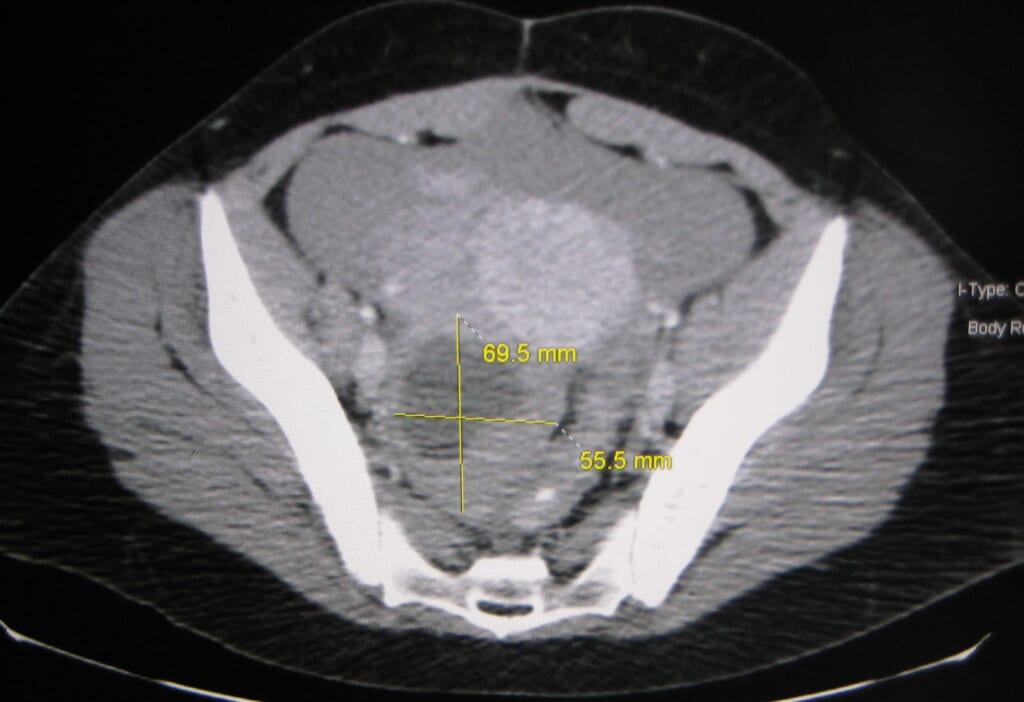
Ovarian dermoid cysts (also called mature cystic teratomas) are a type of germ cell tumor (growths of cells that form from reproductive cells). These cysts are fluid-filled sacs that contain tissues meant to develop in other parts of the body. An ovarian dermoid cyst contains fully mature tissue like skin, hair and teeth. These cysts aren’t cancerous, but they can cause complications.
A healthcare provider can remove your cyst if there’s a risk of it damaging your ovary or rupturing. The medical term for a dermoid cyst, Dr Bajekal points out, is benign mature cystic teratomas. "These are cysts arising from specialised 'totipotential' cells (ovarian germ cells or reproductive cells) normally found in the ovaries," she adds. Teratomas might sound like something out of a sci-fi movie. But they’re really just a result of germ cells going rogue. Teratomas are rare, so finding out you have one can feel scary.
Most teratomas are benign (noncancerous) but they can be malignant (cancerous). Cancerous teratomas may require chemotherapy, radiation therapy or other cancer treatments. The rarest type of teratoma tumor, a fetiform teratoma occurs in about 1 out of every 500,000 people. It’s a type of dermoid cyst that consists of living tissue and often resembles a malformed fetus.
If the teratoma is malignant, chemotherapy is used along with the surgery. Survival rates are excellent with modern chemotherapy. In rare cases, fetal surgery is needed to remove the SCT before it can cause life-threatening complications.
This allows skin cells and other materials to collect in a sac near the skin’s surface. Because the glands that are in the cyst continue to secrete fluids, the cyst continues to grow. If an ovarian dermoid cyst is found or suspected, a physical exam will be done. Your healthcare provider will pay particular attention to your pelvis and abdomen, to check for tenderness, pain, and swollen areas. Small, asymptomatic ovarian dermoid cysts may be discovered incidentally during routine ultrasound exams, such as those given during pregnancy.
A woman had an cyst on her ovary that contained hair and bones - Business Insider
A woman had an cyst on her ovary that contained hair and bones.
Posted: Mon, 21 May 2018 07:00:00 GMT [source]
A healthcare provider will do a physical examination and ask about your symptoms and medical history. They may also recommend tests to confirm a diagnosis. However, if a cyst does not go away or grows larger, it may require treatment, such as surgery to remove it or aspiration.
Teratomas often contain teeth, hair and other tissues because they form in your germ cells. Anytime you notice a new lump or bump on your skin or persistent abdominal pain, you should schedule a visit with a healthcare provider. They can run appropriate tests and give you a diagnosis. Doctors use imaging tests, such as an ultrasound, to help determine if an ovarian cyst is cancerous. They may also perform a laparoscopy to get a sample for a biopsy. In people assigned female at birth, these cysts can develop or change in size throughout the menstrual cycle, and they often disappear on their own.
Page went on to explain that, during an ultrasound at her gynaecologist appointment, she recalled "seeing something in there". It’s even possible to have one with eyes — at least parts of them, including eyeballs. But to date, there’s no record of a teratoma with complete body organs. Here are some frequently asked questions about cysts.