Table Of Content

They are benign and contain a fluid that is white and cloudy. According to the American Cancer Society, simple cysts do not increase the risk of breast cancer. A doctor may recommend surgery or prescription antibiotics as treatment. Cysts are closed capsule or sac-like structures, typically containing a liquid, semisolid, or gaseous material, much like a blister. There are many types, such as acne cysts, ganglion cysts, and kidney cysts. If you have a cyst on your forehead that has been diagnosed, call your doctor if continues to grow or if it has become red and painful.
Top doctors in ,
There’s often more than one treatment available, so discuss the options with your doctor. In some cases it’s necessary to remove a part or all of the ovary. Ovulation and menstruation will continue from the other ovary. A small risk of laparoscopic removal is that the cyst can become punctured and leak waxy material.
What are the signs and symptoms of an ovarian cyst?
They may hurt in the days just before your period starts or when you have lots of caffeine. They’re very common and more likely right before menopause, or afterward, if you take replacement hormones. You don’t usually need to treat them, but see your doctor about any breast lump because it may be something more serious than a cyst.
Epididymal cysts
If it gets infected, it can become very painful and may need to be drained or removed. Younger men get it more often, as do people who sit a lot, aren’t active, or are obese. This often causes a small growth, or “pimple,” that goes away on its own or with over-the-counter drugs. If it’s more serious or a pimple gets very irritated, you might get a larger squishy growth called a cyst. (Hard growths are called nodules.) Talk to your doctor about treatment including antibiotics and other medications for your cysts. Dermoid cysts and cystadenomas can become large and move the ovary out of position.
Learn more about the many benefits and features of joining Harvard Health Online »
If a dermoid cyst ruptures, becomes inflamed, or causes pain or fever, a person should seek immediate medical advice. Depending on the severity of pain or discomfort, a person might also consider visiting a hospital’s emergency department. A healthcare professional may recommend surveillance if a person is pregnant, or if the cyst is a small size and is not causing any symptoms. This is also the case if the cyst measures less than 6 cm in those who wish to become pregnant. They occur when elements of the ectodermal layer become trapped as the embryo develops. The ectoderm is a layer of cells that covers the outside of the body of an embryo.
Complications
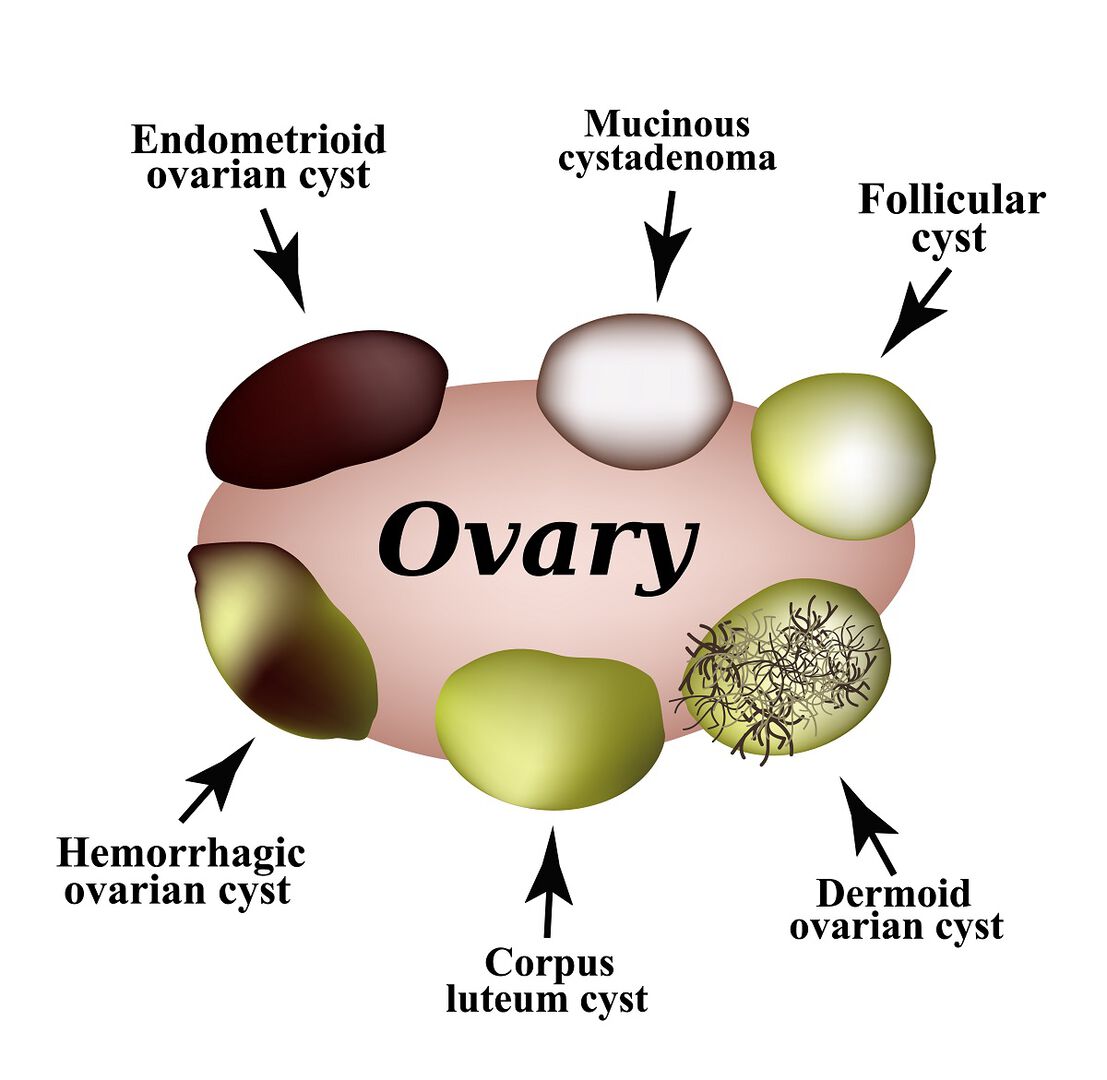
They usually aren’t cancerous, but they can cause complications if they grow or rupture. If you have a teratoma, the best thing you can do is follow your healthcare provider’s recommendations. This usually means having surgery to remove the tumor. Small, asymptomatic ovarian dermoid cysts don't usually require treatment. Tissues in ovarian dermoid cysts can include hair, teeth, skin, muscle, and bone. Dermoid cysts in ovaries typically are present at birth but may not grow or become symptomatic for many years.
© 2024 Harvard Health Publishing® of The President and Fellows of Harvard College
Did You Know Dermoid Cysts Can Have Hair, Skin, and TEETH? - Yahoo Life
Did You Know Dermoid Cysts Can Have Hair, Skin, and TEETH?.
Posted: Tue, 15 Jan 2019 08:00:00 GMT [source]
However, if symptoms are present, the most common symptom that people report is lower abdominal pain. An ovarian dermoid cyst is a germ cell tumor that develops on the ovaries. Although they are benign, they can become cancerous in rare circumstances. Some of the cells that eventually become skin, hair, nervous system, etc., grow atypically with dermoid cysts. Scientists aren’t sure what triggers the atypical growth.

They’re usually found in women during their reproductive years. One theory of teratomas suggests that the condition originates in these primordial germ cells. This is called the parthenogenic theory and is now the prevailing view. Some of these primitive germ cells become your sperm- and egg-producing cells.
Cysts vs. boils
Other areas where a dermoid cyst may appear are the brain, scrotum and the pharynx. If your provider suspects cancer, they may consult with a cancer specialist, or gynecological oncologist, about the best treatment options for you. If the cyst is too large or there’s been too much damage to the ovary, the ovary and cyst may have to be removed together. Your doctor may also use a transvaginal ultrasound.
Collaboration shared decision making and communication are crucial elements for a good outcome. The earlier signs and symptoms of dermoid cysts are identified; the better is the patient outcome, satisfaction, and prognosis. Most cysts are functional and will likely go away within a few months. You may need follow-up imaging to make sure a cyst isn’t growing. Follow your provider’s advice closely if they see a cyst that may cause complications in the future. Your provider may suggest watchful waiting, prescribe medications or recommend a mixture of both.
These hormones regulate ovulation (release of the egg from the ovary) and the menstrual cycle. But if they get large enough or are in a certain spot, they can cause symptoms. If people experience symptoms of any complications, they should seek prompt medical attention. They may also order imaging tests such as an ultrasound or MRI scan. They most commonly affect the ovary on the right side, but in 12% of cases, they can develop on both ovaries. Removal of a testicle will affect your sexual health, sperm counts, and fertility.
This can affect the position of the ovary in the body. The cyst can also lead to a twisting of the ovary (torsion). Ovarian torsion can affect blood flow to the ovary. A dermoid cyst is a fluid-filled sac near the surface of the skin that may have also hair, skin, or other tissues inside. These cysts form during a baby’s development before birth and usually need surgical removal. Most ovarian dermoid cysts do not cause symptoms unless a complication develops.
Treatment depends on whether the cyst is causing symptoms or a buildup of fluid in the brain. A doctor may recommend surgery to remove the cyst or aspiration (draining). But, regular pelvic exams help ensure that changes in your ovaries are diagnosed as early as possible. Make a note of unusual menstrual symptoms, especially ones that go on for more than a few cycles.
Less often, magnetic resonance imaging (MRI) is used to identify ovarian dermoid cysts. An MRI can offer additional insight into the make-up of a cyst if an ultrasound doesn’t provide enough information. Sometimes, these layers grow atypically, with mature tissue bunching together to form a dermoid cyst. The cyst may contain hair and teeth, but it may also include tissue that arises from any of the three layers that make up a germ cell. Anyone with ovaries can develop an ovarian dermoid cyst.
People should seek prompt medical help if complications develop. If a pregnant person requires surgery, a 2018 review found that laparoscopic surgery is safe and successful. However, scientists are not sure why this developmental anomaly happens. If a teratoma is detected in the fetal stage, your doctor will carefully monitor your pregnancy. Dentigerous cysts account for 24% of all cysts in the jaw.
Diagnosing a periorbital dermoid cyst or a similar cyst near the skin’s surface in the neck or chest can usually be done with a physical exam. Your doctor may be able to move the cyst under the skin and get a good sense of its size and shape. Typically, removing a dermoid cyst is not an emergency procedure.


No comments:
Post a Comment